

Business Operations & Market Analysis
By Steve Kessel, CRA
There are currently many forces disrupting body shop repairs resulting in ever-increasing pressure placed on collision repairers.
Visit CRA’s industry news blog page for more relevant articles.
It has been a slow start to the new year in the local body shop industry as the nation takes even longer to shake off the summer holiday downtime in South Africa.
Having said that, as a new year, we find a number of our insurance work providers sending out their customary service level agreements documents which often need express reply and agreement, with even more conditions attached to them. Bound up in these proposed conditions is a measly average 3.5% rate increase which is woefully short of what’s actually required in our real world.
There is still the unexplained enigma of why additional allowances for processes such as jig hire and set-up, wheel alignment, etc and other required processes are not being paid for at fair market value. Current rates or inclusion of new activities required such as ADAS device calibration and pre-scan, now absolutely necessary to restore vehicles to full operation and to manufacturers pre-accident condition, are also not included. These activities are labour intensive and subject to equipment and licencing that constantly increase in price – the compounded effect is the lack of inflationary adjustments that are manifests as unsustainable remuneration to repairers.
Current shop visits and contact with members recently, has seen a huge change of authorised repair coming from recent market takeover by newly introduced Chinese/Indian manufactured vehicles. Only a couple of these new models on local roads carry adequate spares back-up and most importantly, repair method data. The distributors of these vehicles will be set to give up reputation when these damaged units have no repair parts available. Excessive cost of replacement body panels may accelerate write-off levels on these vehicles due to very low pricing on purchase, which will also affect an insurer and body shop’s reputation.
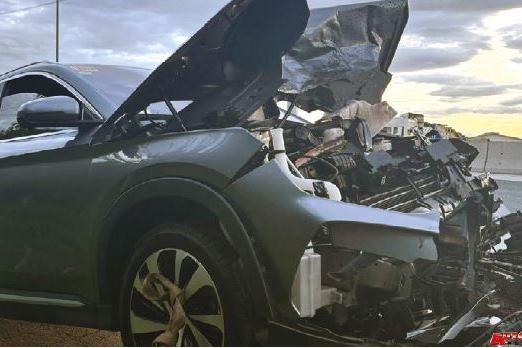
Not so long ago, we noted costing from one Chinese brand with a R98 000 price tag on two doors and a front fender panel supply. An almost out of the show room vehicle is becoming possibly uneconomical to repair. The situation may become ever more complex as on another repair with a rear side impact area, strangely all the airbags deployed. The inflow to repair volume will over time increase volumes to less work opportunity due to reinstatement cost. Now introduce the complexity of electric and hybrid vehicle repair process times into the mix and it will also impact repair costs dramatically.
These vehicles also require around 30 metres of space to disarm the vehicle battery power to ensure a safe repair. Most body shops can’t accommodate this in their repair facility which in short means that the required work is outsourced. Who takes responsibility for payment?
Thankfully our members’ shops appear to be relatively busy right now buoyed up in some areas by hail damage and poor South African levels of road safety, as well as driver arrogance on the increased traffic flow to and from holiday destinations, and general day to day driving.
In summary this uptake may have negative outcomes with uneconomical to repair values. This work will then bypass a repair operation and go straight to a total loss salvage auction – a factor which should raise a few eyebrows.
Several technology framework changes are ahead, which will deliver enormous changes in vehicle repair, paired with OEM design trends and major change to the type of repair work and the major change to workflow and skills on the body shop floor. It seems it is going to be another complex year in body shop repair activity with slower overall growth despite growing vehicle new sales. Accident rates should be reducing because driver safety devices included in entry level models.
There will however be sales opportunity as the Chinese brands rewrite competitive dynamics through included features and pricing, however essential planning and skills upgrading will become key to ensure repair opportunity. Thankfully South Africa is firmly based in a global market where currently up to 60% or more new vehicle units will be produced with ICE propulsion, due to vast long-distance travel and lack of charging stations. This won’t be changing that soon.
CRA annual conference
Our recent national conference was an eye opener and highlighted introduction of these technology changes that are set to keep the disruption of collision repair at a fastmoving pace. Keep an eye out for information on our 2026 Conference. Members and other guests will be able to stay ahead of the game by learning more about what is on the horizon and be given support to help with future business security.
Article Credit to Automotive Refinisher Magazine
What is your view on the ever-increasing pressure placed on collision repairers? Let us know in the comments below. Also, if you found our content informative, do like it and share it with your friends.
Click HERE to join the CRA Industry Newsletter, it’s FREE
CRA is the innovative and trusted source for motoring information and the latest news to help entrepreneurs, business owners, managers and people working in the motor industry to stay informed and change their world. Get the advice your need to start, glow, and lead your business today. Get unlimited access to all articles.